Reconfigurable Automation Tower
/aux_tower
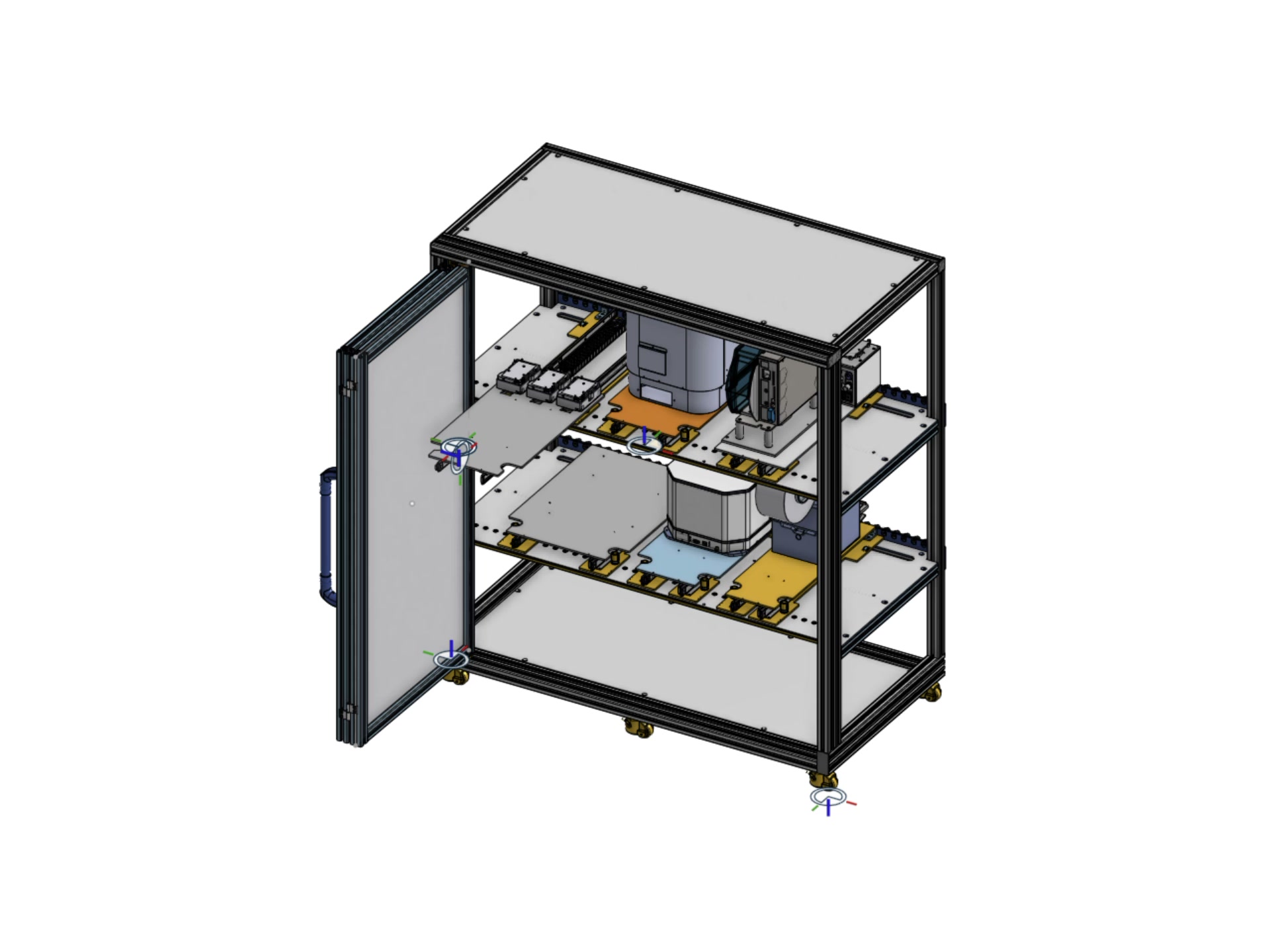
A rolling tower that holds lab automation instruments. Each instrument sits on a slide: pull it out and a person can work with it, push it in and a robot arm can reach it. When one needs service, it comes out and a replacement goes in within minutes.
- Modes
- Slide out for people, slide in for robot arms
- Payload
- Lab automation instruments handling SBS sample plates
- Service
- Twist lock and rollers for hot-swapping an instrument
Tools & skills
- CAD
- Onshape assembly, mate connectors, revolute and slider mates, Animate mate
- Hardware
- T-slot aluminum frame, profile hinge blocks, hold-closed drawer slides, retractable knobs, rolling locating modules
One instrument, two users
Lab instruments in an automated line have two kinds of users. A robot arm needs every instrument to be in exactly the same place each time it reaches in. A person needs room to get their hands on it. A fixed shelf serves one or the other. This tower serves both by putting each instrument on a slide.
- Slide outA person
- The door opens and an instrument rides out past the frame, so someone can load it, check it, or work with it by hand.
- Slide inA robot arm
- The instrument sits back in its home position, where a robot arm picks and places SBS sample plates on it.
Opening the door
The front door hangs on two aluminum hinge blocks bolted to the frame. In the model the door is a single revolute mate, so I could swing it through its full range and check that it clears the frame and the instruments at every angle.
Sliding an instrument out
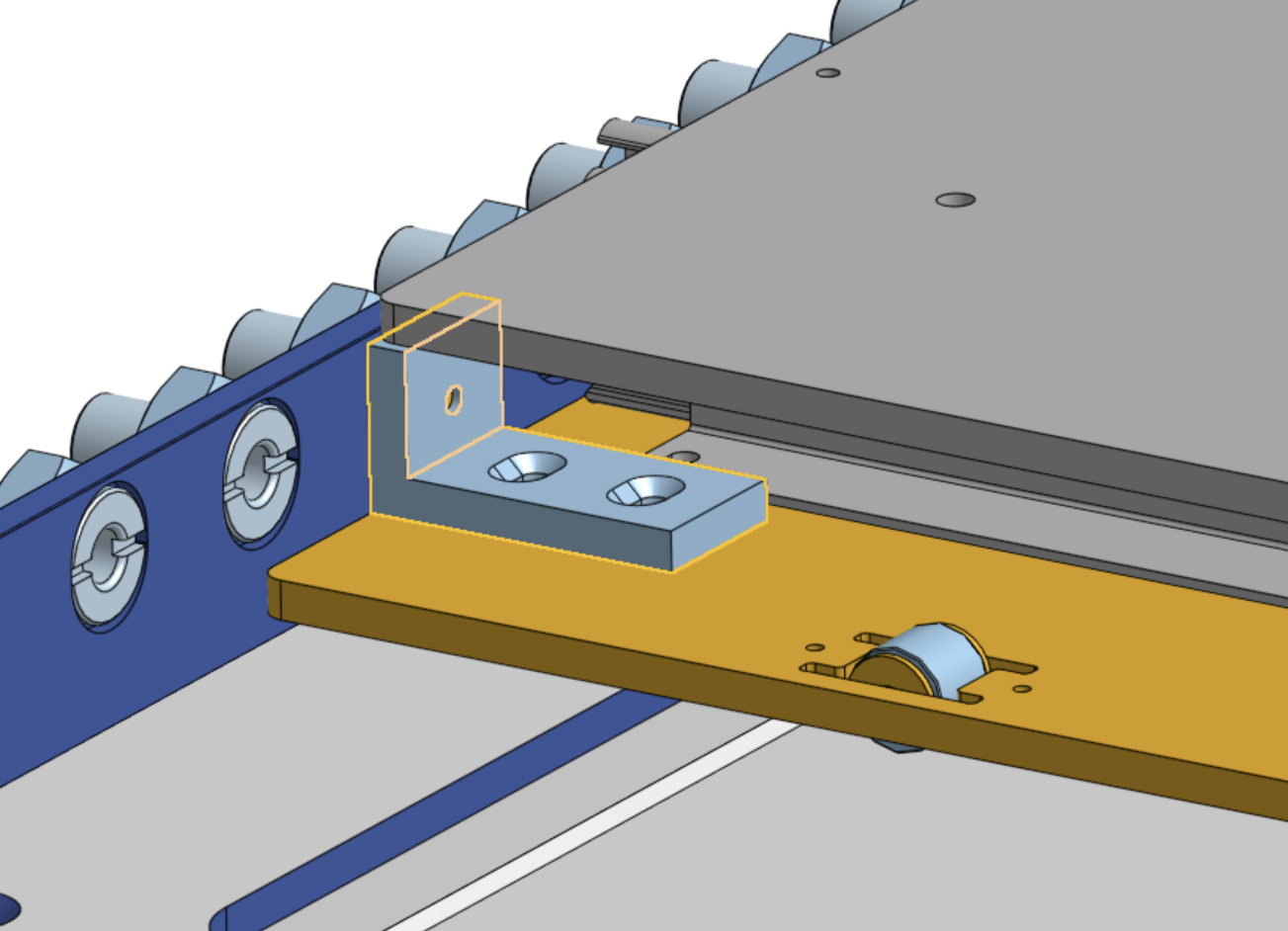
Each instrument plate rides on a pair of drawer slides. With the door open, the plate pulls straight out past the frame for a person to use. Pushed back in, the slides hold closed, and the instrument returns to the spot the robot arm was taught.
Swapping an instrument
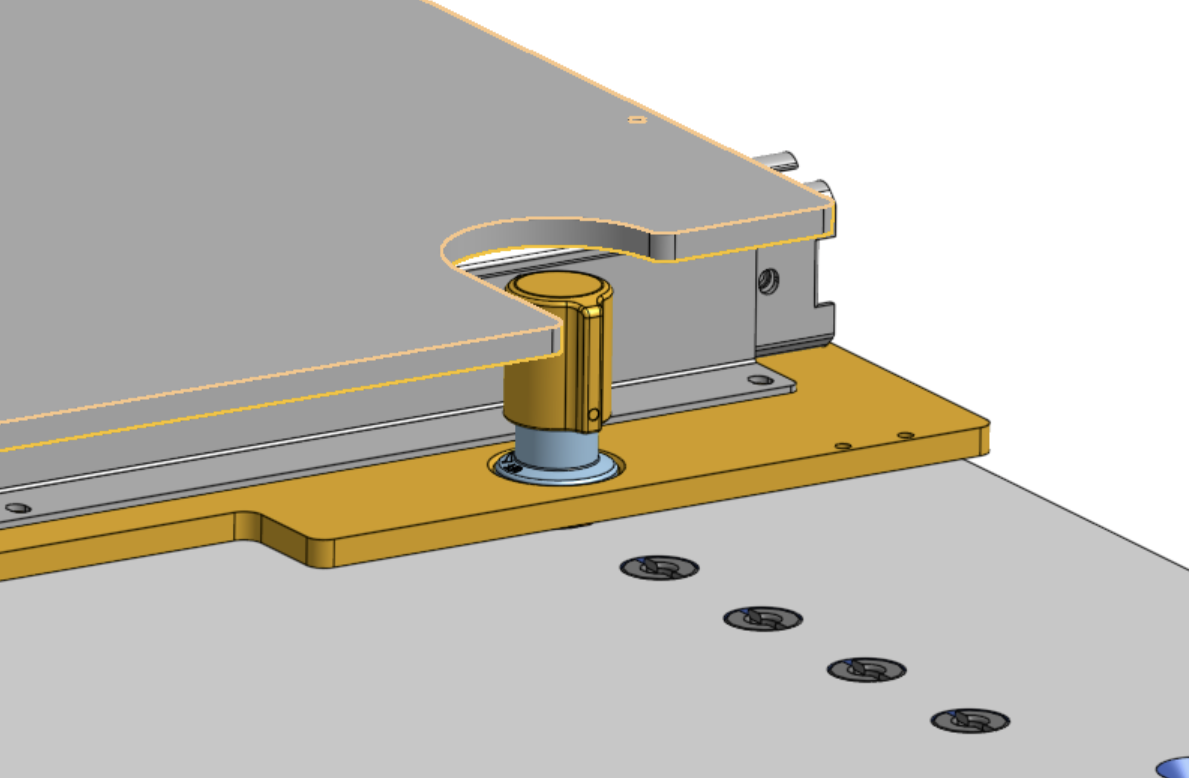
Instruments need preventive maintenance, and sometimes they break. If one is bolted in, the whole line waits while a service engineer takes it apart in place. Here, the engineer slides the instrument out, releases the twist lock, and rolls the instrument plate off its slide. A replacement rolls on and locks into the same position, and the line keeps running while the original goes off for service.